Showing posts with label Good Writing. Show all posts

Wednesday, September 2, 2026

It's the fifteenth anniversary for the Insecure Writer's Support Group. Let's chat about character archetypes in writing.


I honestly cannot believe that the Insecure Writer's Support Group is on its fifteenth year. Like...what the hell? How did this much time go by? I guess the answer is one day at a time, however, it seems like only yesterday when this thing was starting. Way to go, Alex! Your ideas have a long runway.

Anyway, it's the end of summer 2026. It's been a really hot one where I live, and I've felt trapped in my house and at the mercy of expensive air conditioning. I remember loving summer when I was younger. But it never got this hot. At most, we experienced a few 90 degree days and got by with cold drinks and homemade ice cream. Now, all of the days are in the 90's and twenty-four of them were above 100 degrees. At least I don't live in Phoenix. That city doesn't make sense.

It's also time for the monthly Insecure Writer's Support Group. If you want to participate, go HERE and sign-up. Everyone is friendly and to my knowledge, no one bites.

What is the purpose of the IWSG?: It's to share and encourage. Writers can express doubts and concerns without fear of appearing foolish or weak. Those who have been through the fire can offer assistance and guidance. It was designed to be a safe haven for insecure writers of all kinds.

When do you post?: We do so on the first Wednesday of every month. This is the official Insecure Writer’s Support Group day. You could talk about your doubts and the fears you've conquered, or you could discuss your struggles and triumphs. If you get the opportunity, offer a word of encouragement for others who are struggling, and visit others in the group so as to connect with your fellow writer - aim for a dozen new people each time - and return comments. Be sure to link to this page and display the badge in your post. And please be sure your avatar links back to your blog. Otherwise, when you leave a comment, people can't find you to comment back.

The offical X (formerly Twitter) handle is @TheIWSG and hashtag is #IWSG.

The awesome co-hosts for the September 2nd posting of the IWSG are Kate Larkinsdale, SE White, JS Pailly, Olga Godim, and Natalie Aguirre!

Every month, the IWSG announces a question that members can answer in their post, and answering the question is optional in case you'd like to share something else.
September 2nd question - Do you have a favorite character archetype you tend to gravitate toward in your writing?

I'm a sucker for either the Hero or the Anti-Hero as protagonist. I like a story where someone overcomes obstacles to save the day, driven by courage and honor or by making a heel turn to something that is opposite their nature, but still results in a big win but with dubious consequences for the hero/anti-hero. 

Thanks for visiting, and have a great September.

Wednesday, January 7, 2026

Is there anything in my writing plans for 2026 that I couldn't get done in 2025?


Happy New Year everyone. Now that it is officially January of 2026, I guess it's time to post for the Insecure Writer's Support Group. To those who just stumble across this page randomly, the IWSG was started by Speculative Fiction author Alex Cavanaugh many years ago. It is still going, and you can sign-up to participate HERE if you'd like.

What is the Purpose of the IWSG?: It is to share and encourage. Writers can express doubts and concerns without fear of appearing foolish or weak (I actually never realized how appearing weak was so undesirable to so many people). Those who have been through the fire can offer assistance and guidance. It’s a safe haven for insecure writers of all kinds.

When does everyone post?: The first Wednesday of every month is officially Insecure Writer’s Support Group day. Post your thoughts on your own blog. Talk about your doubts and the fears you have conquered. Discuss your struggles and triumphs. Offer a word of encouragement for others who are struggling. Visit others in the group and connect with your fellow writer - aim for a dozen new people each time - and return comments. This group is all about connecting. Be sure to link to this page and display the badge in your post. And please be sure your avatar links back to your blog. Otherwise, when you leave a comment, people can't find you to comment back.

The X (formerly Twitter) handle is @TheIWSG and hashtag is #IWSG.

The awesome co-hosts for the January 7 posting of the IWSG are Shannon Lawrence, Olga Godim, Jean Davis, and Jacqui Murray!

Every month, the IWSG announces a question that members can answer in their IWSG post. These questions may prompt you to share advice, insight, a personal experience or story, but it is always optional.
January 7th question - Is there anything in your writing plans for 2026 that you are going to do that you couldn't get done in 2025?

If anything, I think that I might enter some more short story contests in 2026. Obviously, I couldn't enter them in 2025 because they are contests for this year. But as I've gotten older, I appreciate the format of the short story more and more. I feel like it is a lost art, and a writer can convey a lot in just a few pages. It also forces you to tighten up your prose, which I feel is always useful.

Thanks for visiting, and I'll see you in February. 

Wednesday, September 3, 2025

In the September 2025 IWSG post I put forth my opinion regarding large language models like ChatGPT.


Hello and happy post Labor Day. It is now time for another installment of the Insecure Writer's Support Group as it is September of 2025. In the next few paragraphs, I'll describe to you how this all works. And if you decide that you would like to sign-up for the monthly blogfest yourself, you can go HERE to do so.

What is the purpose of the IWSG?: It is to share and encourage. Writers can express doubts and concerns without fear of appearing foolish or weak. Those who have been through the fire can offer assistance and guidance. It’s a safe haven for insecure writers of all kinds.

When does the IWSG post?: Those who are participating publish a post on their blogs on the first Wednesday of every month. This is officially Insecure Writer’s Support Group day. Ideas on what to write include talking about your doubts and the fears you have conquered, discussing your struggles and triumphs, and offering a word of encouragement for others who are struggling.

You should plan to visit others in the group and connect with your fellow writers. The rule of thumb is to aim for a dozen new people each time and to return comments. This group is all about connecting. Keeping that in mind, be sure to link to this page and display the badge in your post and please be sure your avatar links back to your blog. Otherwise, when you leave a comment, people can't find you to comment back.

The X (Twitter) handle is @TheIWSG and hashtag is #IWSG.

The awesome co-hosts for the September 3 posting of the IWSG are Kim Lajevardi, Natalie Aguirre, Nancy Gideon, and Diedre Knight!

Every month, the IWSG announces a question that members can answer in their IWSG post. These questions may prompt you to share advice, insight, a personal experience or story. If you'd like, you can submit your answer to the question in your IWSG post in lieu of writing something else. But remember that the question is optional!

September 3rd question - What are your thoughts on using AI, such as ChatGPT, Raptor, and others with your writing? Would you use it for research, storybible, or creating outlines\beats?

ChatGPT in my opinion is really powerful. I recently used it to create some online fiction, and though I had to proofread it thoroughly, I was blown away by how good it was and how well it could mimic my own writing. I'm actually convinced that it is powerful enough that were George R.R. Martin to use it, he could finish the books in a Song of Ice and Fire within a year, and no one but (maybe) experts would be able to tell. So...basically I'm saying that writers are at a crossroads. I just hope that people still learn to write and learn to compose, because without the guidance of a real person to steer it along, it will go off the rails. But in order to be a guide, you need to be educated. If I had to compare it to something, I'd say that these AI large language models are like having a magic typewriter. You still have to plug the ideas and the characters in and describe them, but once you do, and give the thing some instructions, it works like sorcery. Anyway, that's just my two cents. 

Thanks for visiting.

Wednesday, September 25, 2024

I think Lovecraftian storytelling elements can strengthen any story.

On the Lovecraft subreddit, I recently came across some recommendations for old school movies that have a Lovecraftian feel to them. Specifically, the list included notables of horror like John Carpenter's The Thing. But it also included a film I hadn't seen (and was interested in watching) called The Abominable Snowman. Starring Peter Cushing (as a young man), this 1950's black and white science fiction film entertained me. But I'm not necessarily saying it would entertain you, so there is no recommendation to watch it forthcoming. However, I definitely see the Lovecraftian elements in play, and I can understand why the people on the Lovecraft subreddit listed it as a film that used horror elements of which Lovecraft was famous.

In The Abominable Snowman you don't really get a view of the monster. This is (I think) key because the special effects of the time were so bad that showing something like that would make the monster "silly." So, kinda like in the movie Jaws where the shark remains mostly unseen for the majority of the film, you instead get this feeling of "something sinister is out there." Other Lovecraftian elements that sprinkle into the narrative of The Abominable Snowman remind me of the short story The Call of Cthulhu. 

In that short story, there's this mysterious statue of Cthulhu that gets described in loving detail, and it makes the reader question the minds of whomever made the thing in the first place. Who could have possibly made this statue and why? Those are important elements in a Lovecraft-type story. In The Abominable Snowman the setting is in some Tibetan town high in the Himalayan mountains. In this town, the people are all superstitious, and the head of the village is an old monk who serves as both a wise person and as a spiritual leader of his people. An expedition into the mountains comes back with a strange silver canister with writing all over it. Inside the cannister is a single artifact: a claw/nail from the finger of some creature. When the old monk is questioned, he says that the cannister is a precious religious artifact that was stolen, and as for the claw? That was a thing carved by monks a long time ago...carved from bone. It obviously doesn't belong to anything real.

But then (of course) you suspect that the guy is not telling the entire story. And that right there is Lovecraft in a nutshell. Exploiting what is unknown so that the mind starts to fill in the details is a kind of horror writing that I never was able to master. But I can appreciate it a lot when I see it. That (I think) has been the terrible tragedy of the Alien universe films: they try to explain too much. But with regard to Alien, I get it. I'm a fan of the films, and I had lots of questions. So the writers made films to answer the questions. But when we all got the answers, not everyone liked what we discovered. And now that Alien has gotten so infused into the cultural zeitgeist that it may be getting a Lego set soon... it's probably safe to say that it has gotten away from its Lovecraftian roots. But maybe I'm wrong. Afterall, I know that there are stuffed Cthulhu's that you can buy online, and every presidential election year the meme "Cthulhu for president! Why vote for the lesser evil!" makes its circulation.

It was a real shock for me then to discover that J.R.R. Tolkien is highly regarded as one of the most outstanding Lovecraftian writers of all time. I came across this tidbit in perusing the Rings of Power reddit. One person laid out examples of Lovecraftian horror all throughout Tolkien's stories. There's the nameless evils in the dark places of the world, and the eldritch terror of Sauron and Melkor. In particular, the drums in the deep section of Moria is packed full of Lovecraftian horror, and the ringwraiths (the Nazgul) are embodiments of that kind of inexplicable evil that really isn't explained all too well. They are just there, they are evil, and they are intelligent. The development of all of those nameless things by people playing in Tolkien's sandbox (much to the chagrin of uber fans of his) has been at a steep cost: knowing all the answers doesn't necessarily make for a better story. I (for one) always wanted to know the connection the elves seem to have with actual light, because I could never quite get there on my own, and I don't think Tolkien really knew either (in clinical detail). With the help of the other writers just literally spelling it out to me, e.g., without light elves fade and so does their kingdom and their immortality...I could finally see why light was so important. But now I do, so I'm happy. But others are actually mad about it, and they think that the writers for Rings of Power have shat all over Tolkien's legacy.

If I were writing a story now (presently I'm not), I think that there would be a question in my mind: To Lovecraft or not to Lovecraft? I believe that the answer to that should always be "to Lovecraft" simply because withholding information and creating unresolved questions is a great way to build tension in a story, and it's a great way to enlist a reader's imagination. Given just those two things it honestly doesn't seem to have a downside.

Wednesday, August 7, 2024

Let's talk about A.I. for the August 2024 Insecure Writer's Support Group post.


Hello everyone. It is time once again to air the insecurities and fears that we all have that comes from writing. But first, a little housekeeping with regard to the Insecure Writer's Support Group. This is a monthly blogfest that was started by best-selling science fiction author Alex Cavanaugh over a decade ago. It is a popular touchstone with writers, and if you are interested in participating in it, you can go HERE to sign up. And now, to answer a few questions that you might have....

What is the purpose of the IWSG?: It is to share and encourage. Writers can express doubts and concerns without fear of appearing foolish or weak. Those who have been through the fire can offer assistance and guidance.  In other words, it’s a safe space for insecure writers of all kinds.

When do you post?: The first Wednesday of every month is officially Insecure Writer’s Support Group day. On this day, you should post your thoughts on your own blog. Some ideas include 1) talking about your doubts and the fears you have conquered, 2) discussing your struggles and triumphs, and 3) offering a word of encouragement for others who are struggling.

To get the most out of your participation in the IWSG, you should plan on visiting others in the group so that you can connect with your fellow writer. A good rule is to aim for a dozen new people each time, and you should comment on those blogs and return any comments you get on your blog. This group is all about connecting. Be sure to link to this page and display the badge in your post. And please be sure your avatar links back to your blog. Otherwise, when you leave a comment, people can't find you to comment back.

The X (Twitter) handle that is used by the group is @TheIWSG and the hashtag is #IWSG.

The awesome co-hosts for the August 7 posting of the IWSG are Feather Stone, Kim Lajevardi, Diedre Knight, C. Lee McKenzie, and Sarah - The Faux Fountain Pen!

Every month, the IWSG announces a question that members can answer in their IWSG post. These questions may prompt you to share advice, insight, a personal experience or story. Include your answer to the question in your IWSG post or let it inspire your post if you are struggling with something to say.

Remember, the question is optional!

August 7 question - Do you use AI in your writing and if so how? Do you use it for your posts? Incorporate it into your stories? Use it for research? Audio?

I don't think that I use any a.i. in my writing. However, I'm not so sure anymore as it has infused just about everything that I research online or look at online. But I certainly don't cut and paste from one thing to another. Now, where I have used it is for short snippets that I read out loud in my D&D game that runs on Saturdays. This is not something I consider writing. One such example might be a dream sequence that one of my player's wants for their character. Usually, I'm not too interested in the weird character choices that other people make, so pretending to have interest and just have a.i. write it up so I can read it out loud is a good way to make them happy and to make me happy at the same time. For example, I have one player who is a furry in my game (she has a fursona) and wants to have a romance with another rabbit person. 

That's not my cup of tea. But a.i. doesn't care, so I prompted it to write three paragraphs of a nice clean dream of the two rabbits chasing each other and being all rabbit like. I read it out loud and she really liked it. Cost me nothing, and I moved on with the game. I could give you a dozen or more examples of this kind of thing where I'm not interested at all. But, in 2024 I don't have to be interested. It takes ten seconds through ChatGPT and it sounds "good enough." I think that this is really where a.i. shines: it allows you to generate content that you would find exceptionally boring or uninteresting that another person really wants.

Artists have always been at the whim of their patrons in many ways. I imagine that quite a few artists over the years and centuries have needed to draw and/or paint things that they didn't find interesting at all just to get the money that they needed to be able to work on the projects that they really wanted to see to fruition. This is kinda what I'm talking about here. Artists no longer have to do that. A.I. is there to pick up the slack whenever there's a need for something that no one wants to do. That is its true strength. But yeah, I have never used it for my official writing.

Thanks for visiting my blog. 

Monday, July 8, 2024

How important to you are the answers in a story?

I read an online homage to Ridley Scott's Alien (the original), which has spawned a lot of sequels. In this article that I stumbled upon (in my daily browsing), the author claimed that it is still a perfect movie. I also agree with this statement. However, they pointed out something about its storytelling (that I hadn't quite noticed before) that may be the main reason it is a perfect movie. It sets up a bunch of mysteries and it never resolves them. It also explains that for these same reasons, Prometheus is a failure of a story. It seeks to answer those questions set up by Alien.

So, this was a weird but important take on storytelling that I wasn't prepared for: knowing the answer spoils the story. But in most situations, this seems to be true. In Alien, we are introduced to a crew on some kind of industrial vessel that gets diverted to answer a distress beacon. We later assume that the distress beacon was from an alien vessel, and then the android on the ship ends up being a villain because the company knew that there were creatures on that planet, and the company that built the android wanted a sample brought back to them.

But there are never any answers given in any of that. How did the company know that the alien vessel was on that weird planet? Why did they want a sample brought back? And so on and so forth. As human beings, I think that we are programmed to want to follow questions back until we either come up with nothing, or an answer surfaces and then we can find some level of satisfaction and move on. But in storytelling, it is probably better to have an arc where you set up mysteries and just never resolve them. For example, in Amazon's Open Range you have a big hole in a field that has no bottom and allows people to time travel to different eras if they fall in. Answering the "why" as to this thing's existence just ruins the show. You can't be bothered by "why." It's better to have people just react to the weird thing that makes no sense. This also probably takes a big burden off the author or the "idea creator," because they don't need to know the "why" and the "how." All that matters is that the mystery "is."

I think that this is the genius of the X-Files, and why it worked so well. They had an alien arc that ran across the show's life, interwoven with "monster of the week" episodes that wrapped up nicely in an hour. However, it can also be overdone. Some people (like myself) do get annoyed with shows or movies that continuously introduce more and more mystery without ever fully resolving anything. Lost is probably the best example of this kind of storytelling.

Some people like to refer to this kind of tale spinning as "high concept." As a refresher, high-concept narratives are typically characterized by an overarching "what if" scenario that catalyzes the following events. Jurassic Park and its sequels are "high concept" in that it takes a question of "what if we could clone dinosaurs?" and then proceeds to answer that question. But in my experience, most high concept storylines write themselves into a corner, and then they can't figure out where to go with the story to make it where you care about the characters enough to keep coming back. In other words, it becomes more about the concept that it does the characters. And then they have no idea how to answer all the many questions that pop up in any satisfactory way. The Walking Dead is a perfect example of this. I read Robert Kirkman's explanation of how the zombie apocalypse started and he said that it came from outer space. He decided never to answer the mystery of how the zombies all started, because doing so lessened the story.

So, having said all of the above, I'm wondering: how important to you are the answers in a story? Are you okay with endless mysteries just so long as the present narrative of people/characters dealing with those mysteries is interesting and well-written? 

Wednesday, July 3, 2024

What word processor do you use to write with?


I hope everyone who visits my blog today has a wonderful July 4th. Along with it being "America's Birthday," it is also time to do the July 2024 installment of the Insecure Writer's Support Group (sign up for it at this LINK). This blogfest was started a long time ago by author Alex J. Cavanaugh. If you have never checked out his books, you should.

So, what is the Insecure Writer's Support Group anyway? Allow me to explain.

What is the purpose?: It is to share and encourage. Writers participating in the IWSG can express their doubts and concerns without fear of appearing foolish or weak. Those who have been through the fire can offer assistance and guidance. It’s meant to be a safe haven for insecure writers of all kinds.

When do we post?: The first Wednesday of every month is officially Insecure Writer’s Support Group day. On this day, you should write your thoughts on your own blog. Some examples of what to write might involve talking about your doubts and the fears you have conquered. You could also discuss your struggles and your triumphs. Another idea is to offer a word of encouragement for others who are struggling.

Along with your post, you should try to visit others in the group and connect with your fellow writers. A good rule of thumb might be to aim for a dozen new people each time. When you return comments, you will find that you gather followers and connect. So, prior to that, you will want to make sure to link to this page and display the badge in your post. These are the digital breadcrumbs you will leave behind that make certain others can find you in the huge ocean that is the internet.

The X handle for the Insecure Writer's Support Group is @TheIWSG and the hashtag everyone uses is #IWSG.

The awesome co-hosts for the July 3 posting of the IWSG are JS Pailly, Rebecca Douglass, Pat Garcia, Louise-Fundy Blue, and Natalie Aguirre!

Now, every month, the IWSG announces a question that members can answer in their IWSG post. These questions may prompt you to share advice, insight, a personal experience, or a story. If it does, you could totally use this as your post. But you should remember that the question is optional.

July 3rd question: What are your favorite writing processing (e.g. Word, Scrivener, yWriter, Dabble), writing apps, software, and tools? Why do you recommend them? And which one is your all-time favorite that you cannot live without and use daily or at least whenever you write?

For me, it is Microsoft Word. I think it is an indispensable tool now, and I know how to format everything. I make it so that my spacing between lines is automatic, that the indent is automatic (I don't press the "tab" button anymore), and it has some fantastic a.i. driven spell check as well as "document review" editing options. I never use a.i. to write. However, I would be a fool if I didn't use its power to read my document and look for errors. It does this literally for free. I'm old enough to remember when people needed to hire editors to look through their stuff. This new way is incredibly good, and I think it is better than trying to find someone who will take the time to go through hundreds of pages of material looking for errors. It's also extremely easy to format things for online publishing, like Kindle or Lulu. The only downside to Microsoft 365 is that it requires a subscription now. But I've installed some copies of it on computers owned by friends, and they've paid me a modest sum, so the cost is relatively modest.

Thanks for visiting, and may all of you find the word/writing processors that suit your style.


Monday, February 6, 2023

Having fascinating characters is the most important thing in any story whether it's fiction or nonfiction.

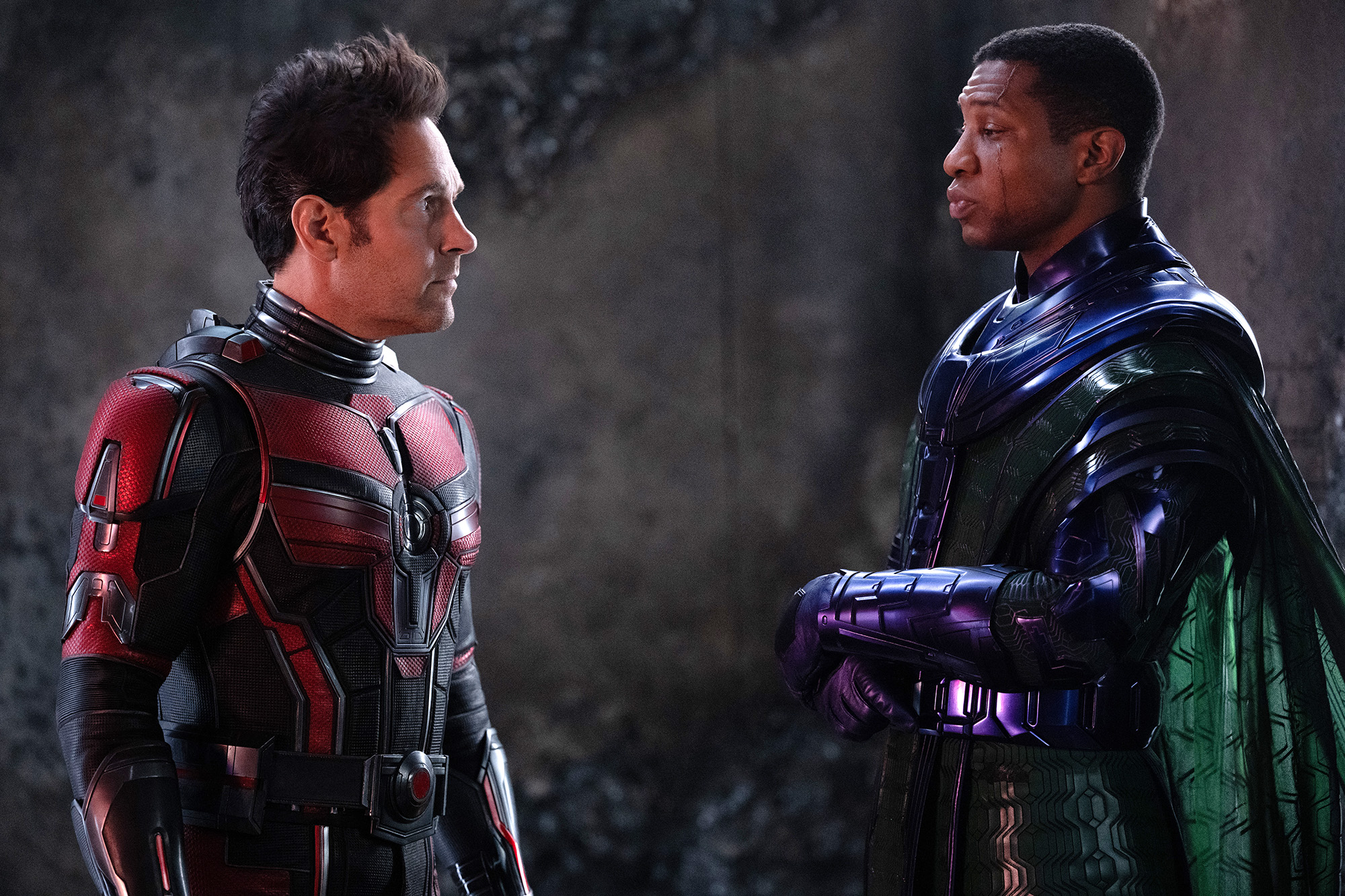
These are two very interesting characters.

In watching the trailers for The Ant-Man and the Wasp: Quantumania, a simple truth emerged that seems obvious. But it took me writing it down before I absorbed it. It reminds me of a story I heard about naming things. Sure, the color "blue" existed before it was named. But somehow adding a name to the color gave it new dimension and allowed our brains to comprehend it in a way that was useful. So, what was this simple truth? A story, and I mean any story, is nothing without good characters.

I don't know when this became true. History is replete with narratives that don't have good characters. And of all of those that I've read without good characters, they are all boring. Few people like to read historical accounts if they don't have colorful characters. Chaucer's Canterbury Tales wouldn't have struck a tone in the people of its age if the characters within it didn't have splashes of interest to them. A story about dinosaurs is nothing if you don't have good characters that exist in and around the dinosaurs to give them interest. A galaxy far far away is uninteresting until you give us the characters from far far away who behave like spoiled and dramatic teens and who do horrible things to other people until they are redeemed by an estranged son.

 The Japanese anime Gundam would be unwatchable without main characters like Amuro and Char Aznable. The same is true for the Marvel stories. The characters are everything. So as storytellers, when writers like you and me sit down to create our tales, we should be spending a ton of time on the characters. World-building (yes) is important, but it's not the most important thing. Characters first and foremost make a thing fun. They make a thing interesting, and it's the hook that brings audiences back. It's what we like to see. It's why I keep going to Marvel movies to see Paul Rudd as Ant-Man and Jonathan Majors in the role of Kang. It's why I keep going to see Thor movies. I find Chris Hemsworth to be extremely funny and entertaining in that role, and I'll keep opening my wallet to get more of that.

It's taken me half a lifetime to understand this simple concept. My friend Brad said it to me in fewer words many years ago in a conversation about his night time activities. He said in response to me asking why he liked population density so much, "Mike, people make everything fun." As a person that frequently has bad interactions with people, I didn't truly comprehend what he was saying. But between then and now, I've had quite a few positive interactions with people and my mind kind of opened. I would reframe his words today. Rather than saying that people make everything fun, I'd probably say that lots of people can make a thing fun. But it can also go the other way, and it frequently does. But if you're going to have any chance at this elusive phenomenon called fun, you're going to have to do the activity with more than just yourself. And that's because characters (at the end of the day) are the only thing that makes anything interesting for us humans.

A few years ago, I thought that Disney had (maybe) reached peak comic book with Avengers: Infinity War and Avengers: Endgame. But they haven't. The reason? Characters. It's always been about characters. What made Avengers: Endgame so good were the characters we were all invested in. And the villain, Thanos, was a fantastic character who was on this disturbing mission to wipe out half of all life so that the rest could flourish. Well, they don't actually need to "outdo" that. They don't need to go bigger. The key to telling good stories is always "good characters" and something tells me that this is the direction that they are building toward in Phase 4. We'll definitely know more in a week or so when the next Ant-Man movie drops, but I suspect the characters, the villains, and everyone's motivations is the vehicle that will propel us into a spectacular Avengers movie where all of the characters once again get to shine, because they are just so damned interesting.

Wednesday, August 4, 2021

The best book about the writing craft I've ever read was written by Stephen King.


August has finally arrived, and with it is the first Wednesday of the month. That means it is time to participate in the Insecure Writer's Support Group blogfest, which you can sign-up for by going to this link. I'm old enough this month to remember when all of this got started with Mr. Alex J. Cavanaugh (science fiction author), and his really good idea to get all of us to participate in this kind of thing on a monthly basis. However, if you are new and have questions, here's what the IWSG is all about:

Purpose: To share and encourage. Writers can express doubts and concerns without fear of appearing foolish or weak. Those who have been through the fire can offer assistance and guidance. It’s a safe haven for insecure writers of all kinds!

Posting: The first Wednesday of every month is officially Insecure Writer’s Support Group day. Post your thoughts on your own blog. Talk about your doubts and the fears you have conquered. Discuss your struggles and triumphs. Offer a word of encouragement for others who are struggling. Visit others in the group and connect with your fellow writer - aim for a dozen new people each time - and return comments. This group is all about connecting! Be sure to link to this page and display the badge in your post. And please be sure your avatar links back to your blog! Otherwise, when you leave a comment, people can't find you to comment back.

The twitter handle is @TheIWSG and hashtag is #IWSG.

Every month, the IWSG announces a question that members can answer in their IWSG post. These questions may prompt you to share advice, insight, a personal experience or story. Include your answer to the question in your IWSG post or let it inspire your post if you are struggling with something to say.

Remember, the question is optional!

Here is the Wednesday, August 4th question: What is your favorite writing craft book? Think of a book that every time you read it you learn something or you are inspired to write or try the new technique. And why?

I suppose (for me) this would be Stephen King's novel, On Writing: A Memoir of the Craft. The thing is full of good advice, like this little tidbit:
"The object of fiction isn't grammatical correctness, but to make the reader welcome and then tell a story....Writing is seduction. Good talk is part of seduction."
By the way, this advice is also good for aspiring DM's who want to run a tabletop Dungeons & Dragons game for people of all ages. Want another tidbit? Here you go:
"Once I start work on a project, I don't stop and I don't slow down unless I absolutely have to. If I don't write every day, the characters begin to stale off in my mind--they begin to seem like characters instead of real people. The tale's narrative cutting edge starts to rust, and I begin to lose my hold on the story's plot and pace. Worst of all, the excitement of spinning something new begins to fade. The work starts to feel like work, and for most writers, that is the smooch of death."
This is one I fail at a lot. However, it doesn't bother me, because I'm comfortable with who I am and what my limitations are as a writer.

Stephen King is one of those legendary writers that manages to be (simultaneously) among the greatest writers who have ever lived while also not being good enough for an award like the Pulitzer or the Nobel. It's a weird eclectic mix of genius and ideas colliding with a reality that speculative fiction really doesn't get much respect. Nevertheless, the man knows what he's talking about, and if you're a successful writer (or just starting out), you should still listen to whatever he has to say.

Thank you for stopping by my blog.

The awesome co-hosts for the August 4 posting of the IWSG are PK Hrezo, Cathrina Constantine, PJ Colando, Kim Lajevardi, and Sandra Cox!

Wednesday, June 23, 2021

When people slow the pacing of their stories they end up better in almost every circumstance.


In thinking about Star Wars from my Monday post, it struck me once again how frenetic each episode of Star Wars is, whether it is in cartoon form, live-action, or in movie form. It's very much a hallmark of the way a Star Wars story is told. And I wonder why. I have a deeper appreciation for slower stories these days. I just finished a book wherein the main characters essentially got together to go and investigate a swamp and have a conversation with an immortal woman who could tell them all about the lands of the dead. That's it...that was the whole book. These days, most people might expect the travel to the swamp to be one chapter, the conversation with the woman who had knowledge about the lands of the dead to be another chapter, and then we are onto something new. Maybe an investigation of the lands of the dead for chapters 3 and 4?

Anyway, I'm glad that didn't happen in the book I read. It took all twenty-six of its chapters to do the above. And that would probably piss off a lot of people. But sometimes (I think) storytellers suffer from too much get up and go. Why do we need to visit three or four different planets in a Star Wars movie? What's wrong with just staying on one planet and that's it. I see the same thing in other franchises too (mostly kid stories...which may explain things as to why they are so frenetic). Why do we need so many characters? What's wrong with just having two or three? That seems like a good number.

I learned quite some time ago that sometimes I can get in a rush to want to get all of my ideas out in front of me. Whether I'm writing or talking, I can feel like there's a bottleneck happening, which can cause me to rush things before I think they are ready. What ends up happening is that the idea gets lost, or the thing I wanted to accomplish does not resonate like I thought it would. Pacing is everything to a story, and I've discovered that (for the most part) one should take it slow. It is better to err on being too slow than I think it is to err on the side of being too fast. However, I only say this because the kinds of stories that I like to read these days have to do with the character connections. Those need time to be nurtured in order to grow strong, and if the author tries to move along too quickly, then the whole thing ends up not making sense. Ultimately, it becomes unsatisfying.

As a result, I think I know why many movies written for kids now annoy me. The pacing is off...there is always too much going on. It makes me wonder why kids need all of that. Their brains should be in a place in life where they are actively seeing out causal relationships, which take time to build. So it's either kids are asking for this, or its a content generator's idea of what kids want to watch or listen to. And somewhere in this train of thinking, someone decided that throwing ideas like tennis balls coming from a machine was the right thing to do. That's how we get movies where a gajillion things are going on at the same time. The Transformer movies are nigh unwatchable because of this.

TL/DR version: The slow burn is good y'all.

That's my two cents. Any of you care to weigh in on pacing?

Wednesday, May 19, 2021

I've decided I'm going to post some of the vignettes the players in my D&D game have emailed me regarding their characters.

With the permission of some of my players in my weekly Dungeons & Dragons game, I'm going to post the fiction vignettes that they've been inspired to write about their characters. I think you may enjoy them. I plan on doing the first one Friday, but first, there's a little housekeeping in that I want to share with you how I started them all out adventuring in my homebrew world (homebrew is a term that means it is not an official product; rather it is one of the author's imagination).

I started them off by actually having them create roleplaying personas of people who are alive in modern Salt Lake City, year 2021. I told them that the only restriction on this was that they couldn't be a famous person. My friend Jed decided that he would be a thirty-five year-old man living in the basement of his parent's house, bitter that he cannot get a girlfriend, and watching anime porn/hentai all day long on Wi-Fi while trolling people on message boards. My friend Jake decided to be a sixty-five year old business man who got drunk a lot because his wife of 25-years left him for the son of a local billionaire. My friend Jesse decided that he wanted to play a guy that was in his eighties who was super rich. My friend Jordan decided he would play the son of Jake's sixty-five year old character. And my friend Sasha decided that he would play the son of the billionaire responsible for breaking up Jake's character's marriage. There wasn't a whole lot of originality, as most people just wanted to be either rich or to make a character that mocked and/or teased Jake in some aspect. Jake has diagnosable levels of narcissistic personality disorder, so it may have been a kind of passive/aggressive response to build characters linked to his background. Additionally, Jake may also have encouraged it as he very much wants things to be about him. But I digress...the table was set for these characters to make their first appearance on my game world, which I call "Wynwrayth."

Now, all of them were friends with a guy they called Milbar, and I always had in my head that Milbar looked like the actor Paul Giamatti. So, I told them that in this fictional Earth, Paul Giamatti didn't exist as an actor because I was going to use him as Milbar. They were okay with that. Milbar in the Wynwrayth universe is the very powerful god of magic. And I stole an idea from the movie, Jumanji (Dwayne Johnson not Robin Williams), to get them to Wynwrayth, only it was a bit more "colorful."

I told the group that their characters all knew Milbar (that was their common link). He was some skeezy guy that always had the hottest women hanging off his arm. He was the friend that always asked for favors, borrowed money, and never paid any of it back. He was kind of a slovenly pig, very well-spoken, but also arrogant. When he was at a party he would be wearing those 70's style open shirts with the big collars, displaying lots of chest hair and gold chains, with a cigar in one hand and brandy in a shot glass in the other. He'd just blatantly tell people, "I'm the god of magic," and then do cheesy card tricks while womanizing.

Anyway, for one reason or another, they all ended up at his house which wasn't in the nicest neighborhood one sunny afternoon in mid-July. With the pandemic raging, they were there to collect on money he owed them (or various other reasons). They arrived and saw in the driveway an adult maid service Kia was parked. I described it as bright pink, with fake eyelashes around the headlights and dominatrix stuff in the backseat. They knocked on the door, but Milbar didn't answer. They heard noises which caught their curiosity, and they walked in. That's when I played a cut scene from the show Billions. I'll link it below.

View it to just after Paul Giamati's character is getting the "golden shower" and that's where I stopped it. Needless to say, my group of players was shocked and laughing out loud. That's when I said, "Suddenly, Milbar notices you and in a fit of shock and embarrassment, he yells, 'Uhh! Uhhh! THIS ISN'T WHAT YOU THINK!" and he's gesturing wildly with his hands when "BAM" they get hit by something that flares out of him, and the next thing they know...they are hurtling through space and time in a wormhole of colors and images that are both terrifying and beautiful. And then everything goes black. When they wake up, they are in a field on top of a hill, and they are no longer in their original bodies. Jed's character (the man that lived in the basement and loved anime porn) is in the body of a super hot half Drow teenaged girl of seventeen (so he's now essentially transgender), and the others have similar and shocking discoveries of their new bodies. Furthermore, just like in the show Jumanji they can slap their upper chest at any time and view their character sheet. However, no one in the world can actually see it. Oh and each one of them has something useless that came from Earth. Cell phones with no signal, paper money and a money clip, one even had the steering wheel to their parked car (but the car wasn't there). One person had a laptop with no signal, etc. And that was the first day for their characters visiting my world, and we've been playing for a little over a year now.

So now, with that background, maybe the vignettes I post will have more meaning (and hopefully you will enjoy them).

Wednesday, May 5, 2021

In the May Insecure Writer's Support Group post I ask you to consider writing a small vignette for a character prior to including them in your next story and see how that goes.


Happy Cinco de Mayo everyone. Today is the first Wednesday of the month, and it's time for an Insecure Writer's Support Group post. The purpose of the Insecure Writer's Support group is to share and encourage. Writers can express doubts and concerns without fear of appearing foolish or weak. Those who have been through the fire can offer assistance and guidance. It’s a safe haven for insecure writers of all kinds! If this interests you, please sign up at this website HERE.

I usually answer the monthly question, but I'm skipping it this month. Instead I wanted to talk about a really fun writing experiment orchestrated by the players in my weekly Dungeons & Dragons group. I challenged my group to email me 400-500 word vignettes about their characters doing "a thing." Picture this as a slice of their character's lives, and you will have envisioned what I asked for perfectly. I told them that my intention was to read these out loud to the group, so if they send one in, they are to be prepared for others to hear what you have written.

The first one that emailed me was regarding a pirate character, and it was called "knife juggling." In the story, the lady's pirate character is having a romance with another in-game player (Lailata), but that character's player is courting "madness" by embracing Cthulhu-esque gods (Lailata is obsessed with the ancient power of the Great Old Ones). Captain Ava (the name of the pirate character), was simply out juggling knives in the morning (its an activity she does) outside their encampment deep within the hot jungles of a place called "The Island of the Snakes." It's a hostile and unforgiving land where dinosaurs and other things are roaming, and where danger is right around the corner. However, it is also a place that can suddenly surprise you with its astounding beauty.

Anyway, Captain Ava was juggling her knives and reminding herself that you should never catch a falling knife. And (of course) the romance with the character who is courting madness has become a bit of a "falling knife." But there is also the added problem of detaching oneself from a character like that, because "just maybe" there's enough there to keep them from spinning off into utter darkness. So, she kind of feels trapped in a relationship that is not as fulfilling as it used to be. Anyway, it was a very interesting read and the whole table enjoyed it.

I've had other snippets emailed to me. One character (who is having a romance with the hag Baba Yaga) wrote a dream about a world that he left behind, and how he now accepts people for who they are on the inside rather than their outward appearance. A third story I received was about a woman learning how to deep dive in the ocean, when the ocean came alive to show her how. A fourth story was about a paladin being taught how to gamble and play a game called Three Dragon Ante by a roguish sort that was about as direct opposite of a person as one can be from this paladin. The fifth story I got was about two royals who are betrothed to one another, eating pie, and figuring out that neither of them likes to eat cheese with pie.

I guess if there's anything I could say about these stories it's that we've all enjoyed them. However, they have also strengthened the connections each person had to their character, and they've made their  characters come alive in the minds of each other. As important as a plotline is to the integral part of writing fiction, I now feel like these "vignettes" could be a better way to flesh out a character even before you begin to include them in a larger story (like a novel or a series of novels). I also might suggest that if you are feeling stuck, to maybe crank out 400-500 words about a thing in the life of that character. Make it come alive by focusing in on a single small event in their lives. You never know where this exercise might lead you, or how it may affect your next writing project.

The awesome co-hosts for the May 5 posting of the IWSG are Erika Beebe, PJ Colando, Tonja Drecker, Sadira Stone, and Cathrina Constantine!

Have a great day, everyone.

Monday, April 12, 2021

There are a lot of clichés about dragons but are dragons themselves cliché?

This is a gigantic dragon miniature that comes painted that is definitely not a cliché

Dragons have been a part of fantasy storytelling for a long time. In addition, they are in mythology and folklore the world round. George R.R. Martin used them (he originally didn't want to but was persuaded by someone he knew that it would be cool). They appear in video games, in Dungeons and Dragons, and they are used in a titles for fictional characters. One example of this is Dracula, who is Vlad Dracul, member of the Order of the Dragon. There are also characters in Mortal Kombat who can fatally kill others by summoning flames that look like a giant dragon, or they can channel the power of a dragon. In China, there is even a year of the dragon.

There are also many clichés about dragons themselves. They are greedy, clannish, they hoard wealth, they are very old (practically immortal), cunning, evil, they like to capture princesses, and when they pop up in stories it tends to be either about "the last dragon" or "a single dragon egg that somehow is alive." They are also (nearly always) extremely powerful.

There are also the creatures who are clearly inspired by dragons. Godzilla and King Ghidorah strike me as "dragon-inspired." And practically every fictional setting with a hint of fantasy has some version of a dragon. There are even some in Star Wars...krayt dragon anyone?

So, with all of these thousands (if not millions) of stories in which dragons play a part, I'm wondering if the monster itself is a cliché and should be avoided by writers. I think that at first we all need to know what a cliché is. The dictionary defines it as a phrase or an opinion that is overused and betrays a lack of original thought. So, a dragon is neither a phrase or an opinion. But it is a creature that is overused and betrays a lack of original thought. Another definition of cliché is a stereotype or electrotype. When I think about it, there are lots of fire-breathing dragons, and I would say that this is a stereotype. But the ones without any kind of breath weapon do show a little originality in thinking. I mean, that does seem unusual, right?

In any event, I think that for a thing to be truly a cliché, that it must be irritating. And I don't think that dragons (for most people) will ever be irritating. As much as I get tired of seeing them in fiction, once I accept that the dragon is there I usually start to think of how cool it is first. And this is true in Dungeons & Dragons as well. In that tabletop roleplaying game, dragons are even a part of the title as well as being infused into every corner of the worldbuilding. I occasionally think, "Ah it's just another dragon." But then I see the really cool illustration that someone does of it and then the miniature comes out and it's super detailed and looks awesome and I think, "Okay...there's nothing cliché about this now."

But that may be just me. So, I'm curious and am going to pose the question to any of you out there that might be reading my words. Do you think dragons are cliché, and would you ever consider putting them into your stories? I look forward to reading your comments.

Friday, March 19, 2021

I'm in awe of the writers who finish a series that is so huge it staggers my mind to think about the length of it.


I am a little in awe of stories that seem to never end. I'm also using hyperbole when I say that these stories don't end. It just seems that way, because authors I've been following have continued writing sequels to their fantasy stories that stretched way beyond anything that I could have envisioned in the past when I first found these writers, read a book, and then said, "Hey, this is pretty good. Is there any more?"

Tolkien left off with (pretty much) his famous trilogy and then a bunch of seed stories that he created in The Silmarillion. To me, these "seed stories" all sounded like something much bigger than I could ever take on. I just wanted to write a few books, and then my story would be finished. I was thinking, "Maybe five books is doable." And then there came along writers like Brandon Sanderson (who writes a book in the time that I take to cook breakfast), and Stephen King who does about the same (but Stephen doesn't so much write in sequels as he does in a shared universe similar to what Marvel does with its movies). I think (as far as sequels go) The Dark Tower stretches to eight hefty novels that could be used as door stops. That's impressive and way beyond anything I could ever do in my entire lifetime I think.

But as far as prolific writers go, it's up there with Robert Jordan (and Sanderson) who wrote a series spanning (I think) fourteen books. That's almost twice what King wrote. Admittedly, Jordan died during the writing of it, but still...it's impressive. And then there's Raymond E. Feist who wrote 30 books all in the same series (I'm on number 25 I think). That was kind of a jaw-dropping number when I stumbled across how many books he'd published in the time since my childhood (when I first discovered him), and there were only four in the series (and I had enjoyed them).

Well, I took a gander at what Terry Brooks has been up to since my college days when i had finished a book called The Elf Queen of Shannara, which (I think) was like number seven in the series. I was just curious to see if there were any more books in that series, and I discovered that the whole thing had been wrapped up with book 35 in 2020. Say, what?! Thirty-five books? That's just insane to me. What kind of story takes 35 books to wrap up? What's even more crazy to me is that he actually finished it, and I guess he's starting a new series which actually looks interesting (I saw the cover art for his new "non-Shannara" book yesterday on io9).

I'm going to have to do some more research. Did these authors actually write all of these books or are they being ghost written by someone? With Feist, I can confirm that I think he's written all of his. The writing style never changes, as does the devotion of the characters. I suppose I could be fooled, but I don't think any second-hand writer could keep track of all the stuff that's going on in those books. I'm also glad that I waited until the series was over before I started reading them. It allows details to remain fresh and crisp in my memory so things he refers back to in his books were things I read maybe a month or two ago (instead of having years between stories).

In any event, I'm no less awed by the production of these writers. And these books are not thin flimsy things, but easily top 200,000 words a piece. Like...what the hell? People who are trying to get established as professional writers should take note: if you want to be a writer, you need to write your fingers off.

Is anyone else following some absurdly long series (absurdly in my book is more than ten)? I'd be interested to hear about them, even if I never get around to reading them.

Monday, February 22, 2021

The key to effective world-building may lie with developing powerful characters first to establish a framework for stories about the meek.

I've been working on a pet project as of late: updating my Dungeons & Dragons homebrew world to fifth edition (which is the newest of the rulesets that is available to purchase). The word "homebrew" simply means that it is my own world that we all play in (I have a group of six players) as opposed to a prepackaged one that comes from Wizards of the Coast. There's a lot of work to it, but there's a lot of work to running a game in someone else's world too because you have to do a lot of reading and memorizing of details in order to make it real. There is no shortcut to downloading that information into someone's brain. Oh if only that thing from the Matrix were real and you could just connect yourself to a computer and download kung fu.

Anyway, I've discovered something interesting about world-building. It is really beneficial to flesh out in detail the super-powerful characters of my fantasy world. For me, it has made me realize that certain things would click together. There would be consequences for the actions taken by these characters. For example, knowing who was at the head of a fantasy empire allowed me to visualize their allies. And if they had allies, then there might be embassies or trade happening between countries. The exercise became a rabbit hole that I could follow down with all of these branches that go this way and that way, and they intertwined to become a kind of supporting network for my whole fake world.

So, I ended up discovering a way easier method to create stories for new campaigns, rather than starting with the low-powered folk and wondering...what can I do with these guys? Or...what are they doing in this whole made-up universe. If I could visualize a super-powerful character in charge of a kingdom or something similar going to war with another kingdom, then it made sense that these events on a huge scale would impact someone very small in the scope of things. So I could tell a singular story about a peasant or a farmer, who was impacted by the events of this huge war.

Having done some of these exercises for my Dungeons & Dragons world, I now wonder if the same kinds of exercises would bear fruit in creative writing. I also wonder if famous authors like J.K. Rowling started with a concept around their most powerful characters. In other words, I wonder if Dumbledore and Voldemort were the first things that popped into her head, and then she created a whole world around these characters. When all the table dressing was set, well Harry Potter would just naturally pop out and that's where she decided to start telling her story. In other words, I'm suggesting a very top down approach to world building, rather than starting with a character like Harry Potter, and then trying to find all the answers as to what he is and what the world is like that he inhabits.

Anyone else use this kind of approach when building a world for your characters? Please let me know as I'm curious.


Wednesday, September 4, 2019

My home is honestly the best place for me to write anything.

Today is the first Wednesday of September, and I'm hearing the lyrics to Green Day's "Wake Me Up When September Ends." That being said, it's also time to post for the Insecure Writer's Support Group.

The IWSG is a monthly blogfest originally created by Alex Cavanaugh. Since that time, it has become a writing force in the online world. I participate in it every month and you should too. To sign up, go HERE.

Each month you get a choice to blog about something related to writing, or to answer the monthly question. I'm doing the latter this month, so without further ado, the September question is:

If you could pick one place in the world to sit and write your next story, where would it be and why?

I think I would still write my story in my home. Honestly, I've created a nice space for my writing, and I think it is the best place I could find inspiration were I truly to seek it out. Right now I'm prioritizing some personal projects ahead of any fiction writing, and it might remain that way for some time. But I recently published a friend's book on KDP print and kindle, and I've got to say that I rather enjoyed working on it. It's made me think that I should publish something of my own, but then I get distracted by the afore-mentioned projects (if you must know I'm drawing a map of my Dungeons & Dragons world using an old edition of Photoshop while watching Netflix or Amazon Prime). Anyway, I find the space I've carved out for myself in my home to be the perfect place to relax and pursue art projects--whether those projects are writing or drawing. And there's close proximity to homemade cookies and refreshments, which I think are a plus when burning mental calories.

So there you have it folks. I'm off to read other's answers to the above question, and I wonder just how outlandish these answers might get. Thanks for the read.

Wednesday, March 6, 2019

Today's Insecure Writer's Support Group question reminds me why writing from unused perspectives can freshen up a story.

Today is the first Wednesday in March of 2019, and that also makes it Insecure Writer's Support Group day. This is a blog fest that happens once a month (and has been a recurring event for many years now). Here's a link to their official BLOG that explains all about it. If you sign up, you'll get an opportunity to really connect with other writers out there.

March 6 Question: Whose perspective do you like to write from best, the hero (protagonist) or the villain (antagonist)? And why?

This is a real thinker. Historically, I've written a lot from the perspective of various protagonists because it seemed like the thing I was most comfortable in doing. Many of the books I read (while growing up) seemed to have this kind of structure to them. You got introduced to the hero, then the hero was presented with an opportunity of some kind, or a conflict of some kind, and you followed them along on their journey. Because it was so prevalent in fiction, I absorbed this as a means to tell my own story, and it's very straight forward.

But now that I'm older, and I've read books by George R.R. Martin, Thomas Harris, James S.A. Corey, and Richard K. Morgan (just to name a few), I've realized the power of telling a story from the anti-hero and antagonist point of view (or at least devoting as many chapters to their perspective as I do to the hero's perspective). The reason? It seems silly to me to insist on villains being all good or all evil, even though that's the diet of fiction I was pretty much raised on. People are only villains when they have motivations that are the opposite of whomever's point of view you are looking through to understand them. Increasingly, I find more value in discovering this, and a lot of the way I've been doing it (in some short stories I've written) is through the antagonist's perspective. 

How a writer chooses to tell a story is just as important as the events of the story that take place. In other words, it's just as important as the plot. And by selecting different points of view than the traditional hero-first perspective, a writer can even retread tired old stories because this new point of view makes them all fresh again. So really, it's just another trick a writer can use to hone their craft.

Wednesday, November 7, 2018

For the November IWSG I'm talking about the importance of improv as a component to creativity.

It's Insecure Writer's Support Group day. If you aren't signed up for the blog fest, you can go HERE and sign up for it. Looking over my notes for this monthly event, I see that the co-hosts for the November 7 posting of the IWSG are Ellen @ The Cynical Sailor, Ann V. Friend, JQ Rose, and Elizabeth Seckman. If any of you happen to visit here during the event, then please make yourself at home :) Now...onto housekeeping. 

The November Insecure Writer's Support Group question is this: How has your creativity in life evolved since you began writing?


Well, I'm more aware of how "pantsing" plays a role in just about anything and how stories can come together by assimilating a lot of different ideas into a pot, kind of like a good chili can have lots of different ingredients. And what I mean by "pantsing" is simply "writing by the seat of your pants." Normally, I'm a plotter, tediously doing so on paper, and then trying to find a direction to take characters. But willfully following inspiration points on the spur of the moment can lead to some really weird and creative areas of a story. And I actually think I've gotten kind of good at spotting when other authors are doing this kind of thing.

For example, (and I say this full well knowing it can never be proven) J.K. Rowling has said that she planned the snake Nagini being a maledictus and having this huge backstory of once being human (that is coming to light in the new Fantastic Beasts movie) all the way back when she was writing the Sorcerer's Stone. However, I'm skeptical of this. I think she came up with the idea much later and thought...hey...this is a thing that I didn't have planned but it totally could fit into this narrative and people will hail me as a genius. You know what? I'll just claim that it happened since the beginning. Yup...I planned it all.

And my response to that is an eye roll and something along the lines of, "Ooookay...yeah...sure you did." And we'll just leave it at that. Who knows? Maybe she actually did have it all planned out. I'm just sayin'...it seems unlikely.

Anyway...pantsing and improvisation is as important a part of creativity as just about anything else. And that's what has evolved in me since I began writing.


Wednesday, August 1, 2018

Here are seven pitfalls new writers should avoid on their publication journey.

Today is Wednesday, August 1st, and it's Insecure Writer's Support Group day. If you want more information on this monthly blog festival, go HERE for details. Ages ago it was started by Alex Cavanaugh, and it's grown to be one of the most influential resources for writers online.

Now, onto the August question:

What pitfalls would you warn other writers to avoid on their publication journey?

Oh I have a list of things!

1) Try not to create ultimatums in your head on what is and is not acceptable as far as publishing is concerned.

2) Don't read your online reviews. You'll be much happier if you just skip all that.

3) Keep strict boundaries on your maximum word count and try to hit that target. Keep stories as short as possible. There's more money in shorter stories than there is in longer ones (generally speaking). Plus it's way easier to edit shorter works.

4) Decide who your audience is before you write the story and target that audience. You should know exactly who would want to read your writing.

5) Read lots of books. Reading is a way to be inspired to write.

6) Keep in mind that if it's too good to be true it probably is.

7) Never pay someone to publish your story.

And that's all the advice I have to give today. Have fun in the blogfest fellow insecure writers.

Monday, March 14, 2016

There is good and bad out there and we all know it's out there but no one can tell the difference between them.

As writers, we know that one of the rules we need to follow is brevity. The industry as a whole pounds this topic. Keep things brief. Whittle down everything so that there's only the best content for the readers. It all makes sense if you think about it. No one wants things to drag on forever, and no one wants a story that never ends, right? So write a story that is brief, unless you don't write a story that is brief, and everyone loves a story that never ends. Wait, what?

Why do we have stories that never end in a world that says this is exactly what you shouldn't do and is basically the reason why authors need editors? Unless of course, chopping content is a meaningless exercise, and there are people that actually want demand that content. I guess the trouble is finding out who wants that content, and those who don't are just part of the problem because they probably didn't like the story anyway.

There are so many examples of this. Brandon Sanderson's new book is so huge that he expressed worry on social media that if it got too much bigger the publisher might break it into two books. Of course fans were like, "we want it to be endless...." It makes me shake my head, and then I realize how much endless content there is that I consume. Heck, why do I even want something that I love to end? Would anyone choose to end a romance with a paramour? Nope.

Supernatural on the CW is getting renewed for its twelfth season, when the story really ended with season five. The Walking Dead is probably endless, but at least they've got a way to keep the story fresh by killing off and replacing the cast with new ones (and they keep coming up with more story that somehow manages to be more shocking than anything you've seen before). Then there's The Simpsons, and I have no idea what season they are on. Same for South Park.
Does "Jumping the Shark" actually matter? For some stories, apparently not.
George R.R. Martin originally intended his fantasy, The Song of Ice and Fire, to only be a trilogy. We know how that worked out. And let's face it, Piers Anthony with his endless Xanth novels and Laurell K. Hamilton with her Anita Blake series have no end in sight. All of this goes into my brain and makes me think that (as writers) we only really need to pare down our words if we have no readers. Once people get to liking what you write, then you can just keep churning out stuff and they'll just keep consuming. That's the way people are. We latch onto things we like and keep going back.

So maybe writers should just remember that you only need to keep track of word count if no one reads your work because no one is interested in what you have to say. But once you get people who are interested in your characters and story, you can just write and write and write and it doesn't seem to matter. J.K. Rowling knows this first hand. She could write Harry Potter stuff until the end of time and none of it would matter. So in a way, ending things has nothing to do with a fan base and everything to do with an author. Maybe what I'm talking about here is "integrity" versus "selling out." Integrity means you stop when you're done with a story even if it's super popular. An example is "Breaking Bad."  Selling out is when you realize that you've created a money-printing franchise that people are interested in, and you just keep churning out material to get a paycheck.

I suppose in the end I'm just interested in the phenomenon itself. That is, I'd like an answer as to why it's okay if some stories never have an ending and why there are so many people who tell you exactly the opposite. I suppose there isn't a good answer unless you accept the fact that people have a hard time figuring out what's actually good. Maybe that's the problem. There is "good" and "bad" out there, and we all know it's out there, but no one can tell the difference between them.

Advertisement 1